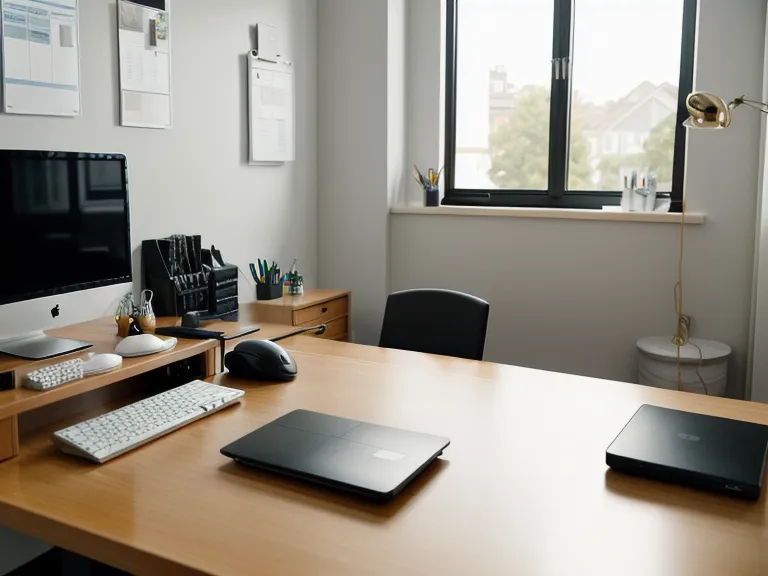
My cursor blinks under a finished project proposal — no tab-switching, no rereading the same paragraph four times, just done, start to finish, in one sitting. I used to file sessions like that under "lucky," the same way you'd file a build that happens to compile on the first try. Three years into life as a remote Portland freelancer, I'd quietly decided the version of me who could do this on command was gone — a casualty of burnout, or just getting older, take your pick. Both explanations turned out to be wrong.
Quick disclosure before we go further: some of the links below are affiliate links, and if you buy through one I earn a commission at no extra cost to you. Everything mentioned here got tested inside my actual freelance workload, not a lab, so treat the results as field notes from one developer, not a verdict. And obviously — I'm not a doctor, so run anything you try past your own physician first.
Fading Focus Isn't Really an Age Problem
Here's the misconception I bought into for way too long: that a fading attention span after your mid-thirties is just entropy, a brain quietly wearing out like an unpatched dependency nobody bothered to update. Every remote-work forum I read seemed to agree — post enough about missed deadlines and someone will tell you it's just aging and to accept it. Look, that framing is convenient, because it takes the environment off the hook. It's not your home office setup, it's not the string of back-to-back video calls leaving you cognitively wrung out by mid-afternoon, it's just you, getting older. Except the timeline doesn't add up. Ten years in an office and I never missed a deadline. Three years remote and I missed two in one month. Whatever changed, it changed faster than a brain ages.
Honestly, what changed was the scaffolding. An office comes with structure you don't even notice — a walk to a colleague's desk that doubles as a mental reset, a meeting room you physically leave, a commute that draws a hard line between on and off. Remove all of that and your brain has to build its own context-switching discipline from scratch, and most of us are terrible at it on our own.
My former coworker Devraj Pillai — we sat two desks apart at my last in-office job before we both went fully remote for different companies — has a running habit of texting me a new app every couple of weeks and abandoning it before the free trial even ends.
The last one he sent had a built-in Pomodoro timer, so naturally I stacked it on top of two others I was already running, on the theory that if one timer wasn't fixing the problem, three would triangulate it. It didn't. I still ended up watching YouTube in the gaps between sessions, just with three progress bars judging me from the corner of a second monitor while VS Code sat untouched in the other window.
Context-Switching Quietly Wrecks Cognitive Performance at Home
Context-switching costs more than the ten seconds it takes to alt-tab into Slack — it's the run-up time to get back into flow afterward, and when nobody's structuring your day for you, that run-up happens dozens of times before lunch.
Before changing anything, I spent a week just tracking where the hours actually went — no fixes yet, just a baseline, the same way you'd profile an app before optimizing it. Closing every tab except the one I was actively using turned out to be a small, boring win — less ambient noise pulling at my attention, which is really just cognitive load reduction with a less impressive name.
Brain fog isn't the same failure as low effort, even though managers — and I — used to treat them like the same bug. One doesn't fix the other, and confusing them is how you end up piling more willpower onto a problem that was never about willpower in the first place.
What I Actually Tried — and What Just Added Noise
By spring I was desperate enough to try a premium capsule stack called NeuroPrime, the kind of product marketed at people who want the full supplement-cabinet experience. I never dug into what's actually inside each capsule — that's a rabbit hole for a different post — but three days into the regimen I was just more anxious, staring at a 404 error with my heart rate up, not more productive.
That sent me looking at what's actually happening when focus works, instead of what's inside a capsule — something psychologists call flow state, the state where code just comes out without you narrating every step to yourself.
A budget option called Neuro-Thrive came next, and it didn't move the needle for my particular workflow — not a bad product necessarily, just the wrong fit. Timing turned out to matter as much as the product itself: anything stimulant-adjacent taken past midday just borrowed focus from that night's sleep, no matter which bottle it came from.
What actually changed things was an audio program called The Brain Song, something you put on with headphones instead of swallowing. Auditory environment control turned out to matter more for me than anything in a capsule — it's less a drug, more a signal to my brain that it's time to get serious, and headphones going on became its own trigger, a cue that a work block is starting before the actual work does.
I've written before about the mechanics of using sound this way, in a post on how to use audio and sound for better concentration, and the short version is that consistency mattered more than which specific track I picked.
Building a Deep Work Zone Without Buying Anything New
Deep work zone doesn't have to mean a dedicated room — it means a block of time with hard edges, something close to what's called an ultradian rhythm, where you work in one long stretch and then step away completely instead of grazing at your desk between distractions.
Morning light did more for my afternoon energy than anything I ever bought — getting outside before the first call anchors something about the rest of the day, though I couldn't tell you the exact mechanism, only that skipping it makes the mid-afternoon crash noticeably worse.
Some evenings I leave on purpose — a walk to Powell's Books on West Burnside Street, no laptop, just wandering the technical shelves until my head stops running the day's diff in the background. That shutdown boundary matters as much as anything I do during actual work hours.
None of this fixed my eyes, for what it's worth — hours of back-to-back calls still leave them dry and twitchy by late afternoon, a specific kind of screen fatigue that no amount of audio or sunlight solves.
For more on what didn't work before any of this clicked, I wrote a longer post on my year of brain fog and why most supplements failed — it's the unglamorous list of duds, and there were more of them than I'd like to admit.
What Actually Moved the Needle
The Brain Song stayed in rotation longer than anything else I tried, mostly because it asks nothing of my willpower — no pill schedule, no forgetting to take it, just headphones and a track before I sit down to work.
Physical distance from the phone still does more than anything digital — mine lives on the other side of the apartment during work blocks, no exceptions, because willpower loses that fight every single time.
Working memory recall came back first, oddly enough — remembering what a client asked for without scrolling back through Slack, holding a whole function's logic in my head instead of rereading it every four lines.
Some of what gets labeled ADHD coping strategies online overlaps with what actually helped me, even though nobody's diagnosed me with anything — single-tasking on purpose, external timers, cutting down on ambient noise. The label matters less than whether the thing works.
If you're over 35 and remote and convinced your brain is just wearing out, check the system before you blame the hardware — audit your context switches, build in a real shutdown, and get outside before your first call. If you want a low-friction place to start that doesn't involve a cabinet of pills, The Brain Song is the one tool out of all of this that earned a permanent spot in my day.
We're not 22 anymore, sure, but the fix was never a supplement or a birthday. It was rebuilding the structure an office used to hand us for free.