
Two thousand milligrams of Magtein — the branded form of magnesium L-threonate — breaks down to roughly 144 milligrams of elemental magnesium. That's less raw mineral than a cheap oxide tablet packs into a single capsule, and it's the reason most magnesium benefit claims about focus and concentration don't survive actual testing against a real workday. I've spent a chunk of my time as a remote worker assuming more elemental magnesium meant a bigger boost to remote work productivity: more focus, better cognitive health, whatever was supposed to fix the fog. That assumption is wrong. It took a handful of genuinely bad mornings at my desk to figure out why.
Why Testing Magnesium Forms Matters More Than the Dose
Magnesium is a cofactor in more than 300 enzyme systems, everything from protein synthesis to nerve signaling, and for a while I treated that fact as license to buy whatever bottle was cheapest and closest. The actual chemistry of why one form reaches brain tissue and another just supports your muscles is its own deep rabbit hole. Not one I'm unpacking here. What I can tell you is that the wrong form feels like a latency problem: the request to focus goes out, and the response just never arrives in time. Figuring out which form fixes that, versus which one just makes you sleepy, takes actual testing, not marketing copy. Before you can tell whether a supplement's doing anything, you need a baseline for what a normal focused day already looks like, and that's a step most self-experiments skip entirely.
The Cheap Bottle That Backfired at New Seasons Market
Honestly, before I even got to supplements, I'd already tried the strict version of keto for about ninety days. It cleared some of the fog early on, but it wasn't sustainable once deadline crunch hit and I needed speed more than ketones, so that approach got shelved. Magnesium came next, and the first bottle I grabbed was the cheapest one on the shelf at New Seasons Market on SE Division St: magnesium oxide. It did nothing for concentration and everything for my bathroom schedule, which is a hell of a way to learn about bioavailability. Oxide mostly just passes through you instead of getting absorbed, so if you're hoping for a cognitive effect from it, you're better off not bothering at all.
Glycinate or L-Threonate: Which One Actually Helps You Work?
Magnesium glycinate is the one most people reach for: chelated, easy on the stomach, roughly 14% elemental magnesium by weight, and widely praised for a calming effect. The first time I took a full daytime dose, expecting something close to a smooth, focused flow, I got the opposite: heavy eyelids and a leaden, sludgy feeling by mid-morning, the kind that makes a codebase you know well suddenly look unfamiliar. Glycinate's muscle-relaxant properties are genuinely useful. Just not at nine in the morning. That same week I also tried the blue light glasses I'd bought out of pure desperation, hoping the problem was screen strain instead of internal chemistry. No help at all, and I got into that more in a piece about reclaiming my brain from screen blur. Magnesium L-Threonate, sold under the brand name Magtein, works differently: it's one of the only forms shown in research to meaningfully cross the blood-brain barrier, and on workday mornings the effect shows up less like a jolt and more like extra bandwidth for context-switching between tickets without everything crashing. I know it's working when I look down and my coffee's still full and gone cold, two hours into an actual block of deep work — on glycinate mornings, that same mug was empty by mid-morning and I was still stuck. None of this is medical advice, and I'm not a doctor. The RDA for adult men aged 31 to 50 sits at 420mg, and if your diet already gets you close to that, adding more of any form is a conversation for an actual physician, not a blog post.

Building a Timing Protocol That Doesn't Backfire
Timing ended up mattering as much as which form I picked. Glycinate moved to my pre-sleep routine, workday mornings went to L-Threonate, and on days that needed more sustained output I'd swap in magnesium malate instead, which gets associated more with energy production than calm. That shift did more for the 3 PM slump than closing Slack notifications or hiding half my VS Code extensions ever managed. Clearing tabs still helps some, it's just solving a different problem than an actual mineral deficiency. It also helped through the kind of afternoon that's wall-to-wall Zoom calls, the sort that leaves you fried by five with nothing to show for it. My friend Rosamund, a UX designer who ended up staying in Portland after we graduated together, texted me at 9 PM once just to ask if a button label was accessible enough — a good reminder that most interruptions aren't actually the problem magnesium is supposed to solve. Clover, from the focus-tracking channel in the Discord community I moderate, was the one who pushed back hardest on the marketing claims around all this, and she was right to. A lot of what's sold as a brain supplement is dosed at a level that couldn't plausibly do what the label promises, and working memory doesn't come back just because a bottle says "brain support" on the front. During a stretch with a brutal deadline squeeze, I also layered in focus soundscapes from The Brain Song, curious whether audio could trigger something closer to real flow while I was still dialing in the supplement side. It helped some. It wasn't a fix on its own.
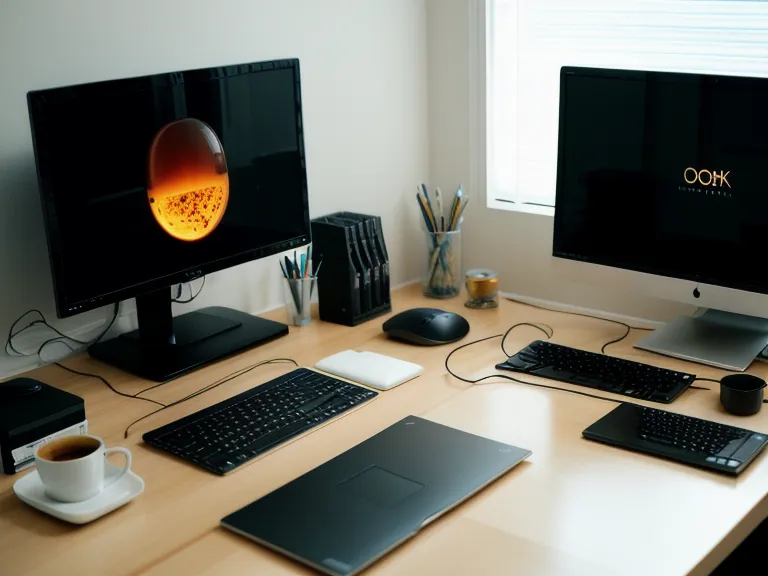
Standing desk wedged into the corner under the bay window, two monitors at eye level, laptop closed and parked on its own arm off to the side — that's the setup this whole experiment happened in. Phone charges on the kitchen counter, forty feet away, mostly so I can't reach for it without standing up first. There's a pothos on the windowsill above the keyboard tray that's more dead than alive at this point but somehow still hanging on, which honestly tracks with how the whole year felt.
The Trade-Off, Spelled Out
So here's where this actually lands, stripped of the research rabbit hole. If your evenings feel wired and sleep is the bigger problem, glycinate is the better tool: just take it after the laptop closes, not before a workday starts. If you need your brain online for a stretch of solo coding or a string of back-to-back meetings, L-Threonate, or malate on days that need more energy than calm, is the one actually built for that job. Oxide isn't a real contender for either use case. An estimated 50% of the United States population doesn't get enough magnesium from diet alone, so the odds are decent you're running some kind of deficit no matter which form you land on. The type still matters more than most people assume, and matching it to the actual hour of your workday is the part almost nobody talks about.