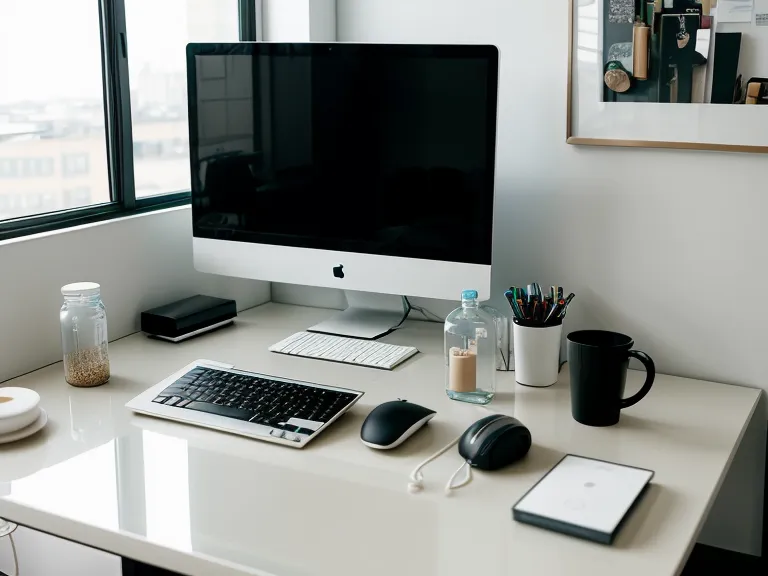
Every capsule I swallowed did less for my focus than the one track I almost skipped. That's the actual scoreboard after a year spent testing remote work focus supplements, apps, and habits against real freelance web development deadlines, not a hook, just where the results landed. Quick disclosure up front since it matters: a few links below are affiliate links, and if you buy through them I earn a small commission at no extra cost to you. I only write about tools that made it into my own productivity stack, brain health claims included, so you're getting the ranked results instead of a pitch.
Look, I used to think "focus" was a personality trait I was missing, the same way some people can't carry a tune. Working from my living room turned out to be less "flexible remote lifestyle" and more "unpaid intern managing my own attention span twenty-four seven," a promotion nobody applied for. Turns out focus is closer to a system problem than a character flaw, and system problems respond to system fixes, not more willpower.
Supplements or Environment: Which One Actually Wins?
Environment, hands down, though that wasn't obvious for a long stretch. I ran an L-theanine and caffeine capsule stack that genuinely worked, for about a week, then quietly stopped registering, like a cache that's already warm and has nothing left to serve. Same capsules, same dose, same morning, and my brain shrugged. That's the pattern with capsules in general: an opening burst, then nothing. What actually held up wasn't a pill. It was changing what my desk demanded of me before I'd even sat down. Undiagnosed executive dysfunction plus a chaotic starting routine is a brutal combination, because if the first five minutes of your workday require ten small decisions, your focus is dead before you've opened a single file.
Screen glare made it worse. Two monitors and a laptop lid I used to leave open threw enough visible blue light spectrum at my eyes by mid-afternoon that focus felt physically uncomfortable, not just mentally hard. I'm not going to get into the wavelength science here, that's a rabbit hole for a different post, but closing that laptop lid and mounting an external display did more for my afternoon focus than any supplement stack I tried.
The Productivity Stack I'm Actually Running
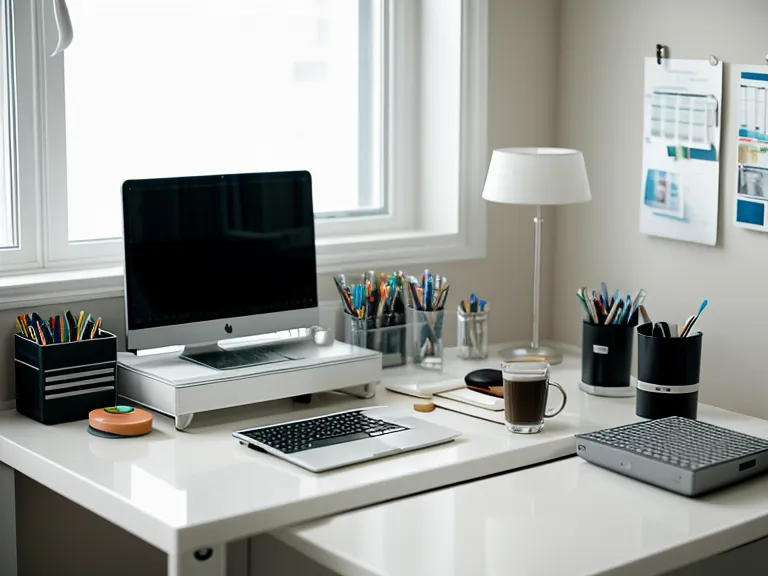
My desk sits wedged into the corner beneath the window, monitors raised to eye level, laptop lid shut and propped on its own arm so I've stopped craning my neck at the built-in screen. The phone charger lives on the kitchen counter, roughly forty feet off, far enough that grabbing it mid-task takes an actual decision instead of a reflex. A pothos that's more brown than green sits on the sill right where I rest my wrists to type, refusing to either thrive or fully die. None of this is about willpower. It's about making the focused path the easy one.
That's basically the logic behind tracking my focus hours like my billable hours too, you can't fix what you're not measuring, and for a long stretch I wasn't measuring anything at all. Once I started logging blocks in Notion instead of just trusting my gut, the audio piece of the stack is what actually showed up as different from everything else I'd tried.
Why the Audio Trigger Outlasts Every Capsule
The piece that actually stuck was audio, which surprised me since I'd written off "focus music" as background-noise cosplay. I started using The Brain Song on a whim, expecting nothing, and moved my phone to the kitchen at the same time so I couldn't blame the track if it didn't work. It's built around a specific gamma brainwave frequency, and I won't pretend to be qualified to explain the neuroscience of that in depth, that's not my lane, but functionally it acts like a Pavlovian trigger. Headphones on, track starts, brain gets the memo that it's time to work, the same way muscle memory kicks in when you open a terminal window.
Whether that's placebo or genuinely mechanistic, I don't know and don't especially care anymore, because the output changed. At standup one Monday, I gave three separate sprint updates back to back, straight from memory, no notebook, no scrolling back through Slack threads to remember what I'd actually shipped. That doesn't happen when your brain is running on fumes.

Pills have latency. You take a capsule, then wait thirty or forty-five minutes for anything to happen, and by then the window to start the task you were dreading has usually closed and you've opened Twitter instead. Audio is closer to instant. I put on The Genius Song on the mornings when I know a nasty refactor is waiting, and the effect on my willingness to actually start is close to immediate, which matters more than people think. The whole stack is really an attempt to lower the activation energy of sitting down, the same way a good CI pipeline lowers the activation energy of shipping, you're not more capable, you've just removed friction between deciding and doing.
I also learned that using audio and sound for concentration only works, in my experience, when it's paired with real physical distance from the phone. Headphones plus a phone within arm's reach is just expensive white noise. Headphones plus a phone charging in another room is a completely different experience, because the notification pull isn't competing with the audio track for your attention. It physically can't reach you.
My college roommate Rosamund, now a UX designer here in Portland, texted at 9 PM the other night asking whether a button label was accessible enough. It sat there until I finished the block I was in, because for once the phone wasn't on my desk daring me to check it every time it buzzed.
The Questions I Actually Get Asked
Clover Mensah, a regular in the focus-tracking channel of the remote-work Discord I run, is usually the first person to call out a supplement claim that sounds implausible, and her question is the one I get most: is this actually brain fog, or am I just being lazy? My answer is that laziness is choosing not to do something you're capable of doing, while brain fog is sitting down, wanting to work, and finding that the part of your brain that sequences steps simply isn't answering, and the only way to tell the difference is whether effort, once you actually apply it, produces anything at all.
Someone else always asks whether the stack works outside my apartment. Not entirely, but close. I've run the same audio-plus-distance combo at Stumptown Coffee Roasters on SW 3rd Ave in the Pearl District, coffee in hand, phone zipped in my bag instead of on the table, and it holds up nearly as well as it does at my desk. What doesn't travel is the environment side of the stack, you can't wedge a standing desk into a coffee shop, so the audio trigger has to do more of the work solo.
The other recurring question is about switching contexts mid-day, jumping from a client call straight into a pull request review straight into a Slack thread about invoicing. That's its own topic, the cost of bouncing between those modes is real and worth its own breakdown, but the short version is that the stack helps you recover from a context switch faster. It doesn't make the switch itself free.
What Didn't Survive the Cut?
Honestly, most of what I tried didn't survive contact with an actual deadline. The L-theanine and caffeine stack I mentioned earlier is the clearest example, good for about a week, then invisible. A rotating cast of other capsules came and went the same way. The one non-audio holdout still on my desk is an air purifier, though I'll admit I can't prove it does anything for focus specifically. I just breathe easier, which counts for something on its own.
Building Your Own Version Without Wasting a Paycheck
If you're trying to build your own remote work focus stack, skip the urge to buy five things at once. Start with the free part: move your phone out of arm's reach during deep work blocks and see how much that alone changes. Then look at whatever's adding friction to the first five minutes of your day, for me that was a cluttered desk and monitors at the wrong height, for you it might be something else entirely. Only after that would I add anything you pay for. I still keep The Brain Song in the rotation because it's the one thing that consistently shortened the gap between deciding to work and actually working, and that gap is where most remote focus dies.
That's the whole stack. Steal what's useful, skip what isn't, and if you only change one thing, start with the phone in another room.