
My invoices never lie. Every six minutes of client work gets logged, timestamped, and billed down to the decimal — that's just how freelance developer time tracking works. My own attention, it turns out, had been quietly overbilling me for years: eight hours of remote-work focus on the calendar, maybe two of them real, and nobody was auditing that gap until I decided to run the same kind of audit on my own brain.
Quick disclosure before the receipts: this post contains affiliate links, and if you buy through one I earn a commission at no extra cost to you. I only mention tools I've actually run through real client work — usually while a production bug is on fire and it's already the middle of the afternoon.
Before going remote, I spent a decade in offices where the structure did most of the focus work for me without me noticing — a manager's eyeline, other people typing nearby, a lunch break enforced by hunger and social contract. Three years into freelancing from my living room, all of that scaffolding was gone, and I hadn't built anything to replace it.
Then I missed two client deadlines in the same month, something that had never happened across that entire decade of office work. Two apology emails, back to back, typing some version of "sincerest apologies" until the phrase stopped meaning anything.
I was sitting at a table at Blue Star Donuts on NW 21st Ave when the second one landed in my sent folder, laptop balanced on a stack of napkins, and I remember thinking that a server with this kind of uptime record would have been decommissioned months ago.
Running a Time Audit on My Own Attention
As a freelancer, I live by the 0.1-hour increment — the standard six-minute block that covers everything from a CSS tweak to a database migration. So I applied that same granularity to my own attention span, logging focus blocks the way I log billable ones. The results were embarrassing: an eight-hour workday that actually contained less than two hours of real cognitive throughput, the kind where I was solving the problem instead of just sitting near it.
The rest of it was work-about-work: Slack threads, low-priority email, and the most dangerous category of all: reading about how to be more productive instead of writing any code, usually parked in some Notion doc I'd labeled "research" to make it sound intentional. Three hours went into researching nootropics one week, and at the end of it I hadn't shipped a single line for the client who was actually paying for that time. Some of that is just what context-switching costs a developer — every Slack ping or reassignment taxes the return trip back into the actual problem, not just the interruption itself. Cutting down the number of open browser tabs turned out to matter more than any supplement I tried, mostly because fewer tabs meant fewer places for my attention to leak.

Honestly, one fix that went nowhere: blue light blocking glasses, worn religiously for months, which did roughly nothing for my actual sleep quality or the crash that followed a bad night. I wanted to believe in them because they were easy — no habit change required, just glasses — but easy and effective turned out to be different categories entirely.
What Actually Deserved the Blame?
After the first month of tracking, I'd been chasing the wrong fix. I'd tried standing desks, a stricter sleep schedule, and Best Magnesium for Focus and Concentration During Work, but a pill-based routine kept breaking against the shape of my actual day — forget to take it, or the kick lands mid-standup instead of mid-task. So I stopped hunting for something to swallow and started looking for something closer to a toggle, on and off like a terminal command.
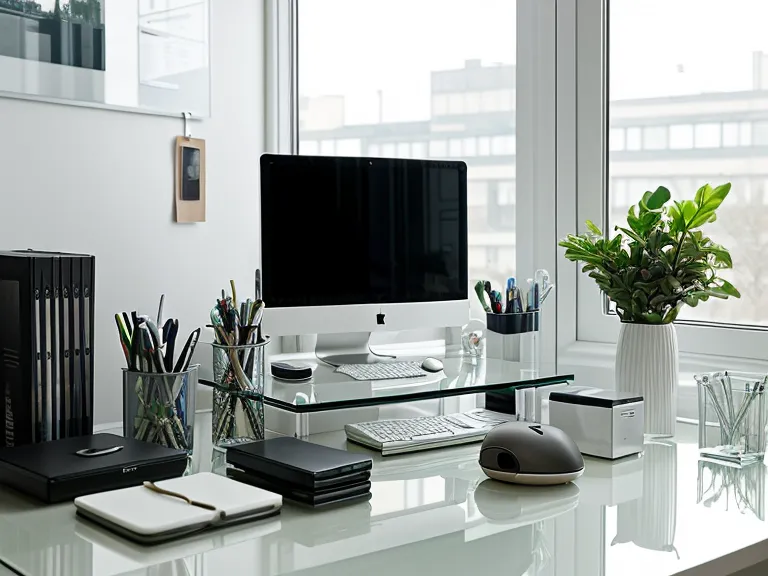
Late spring, I shifted toward audio-based protocols instead. I started testing The Brain Song, which uses specific frequencies to nudge the brain toward a focused state, and it fit my actual workflow in a way capsules never had — no metabolizing wait, just headphones and a signal that a deep work block had started. My whole "office" is a standing desk wedged into a corner of the living room under a window, two monitors at eye level, laptop closed on an arm mount off to the side, so carving out an actual deep-work zone inside that space mattered more than I expected once I had a way to mark the boundary of it.
I remember one afternoon when a production server for a local client went into a tailspin mid-sprint, the kind of context switch that used to leave me mentally fried for the rest of the week. This time there was a strange, humming stillness instead — the urge to check my phone just didn't show up for a solid hour once the audio locked in. Not caffeinated, not wired, just operational. I wrote more about that shift in My Deep Work Experiment: How I Reclaimed My Focus After Three Years of Remote Brain Fog.
Incident-Response Brains Don't Work in Straight Lines
Engineering work isn't linear, and neither is the kind of attention it needs. The Pomodoro Technique traditionally uses 25-minute intervals, but stopping mid-logic-problem because a timer went off never made sense for how bugs actually get solved — you don't get to pause a stack trace. Adapting my tracking meant accepting that incident response has its own rhythm, not the one from a productivity app's default settings.
The Brain Song became less of a listen-and-relax thing and more of an anchor: if an urgent Slack message came in, headphones stayed on, I dealt with the fire, and the background audio kept a thread of the previous task alive somewhere underneath the noise. It cut the return latency once an incident was resolved, more than any capsule stack I tried, though a couple of people I know swear by NeuroPrime for the genuinely brutal coding days. Timing seems to matter as much as which tool you pick — a focus trigger deployed at the start of a block does something different than the same trigger reached for mid-crisis. None of that means much without a baseline, though: I only trusted any of these comparisons because I'd tracked a few normal, tool-free weeks first and knew what my actual floor looked like.
Look, I'm not a medical anything. I have zero clinical training, and you should talk to your own doctor before experimenting with brain health tools, especially if fatigue or burnout has been going on a while. I'm also not going to pretend I understand the chemistry behind why certain ingredients get combined the way they do in these formulas; I just track what changes in my own output. Eye strain from staring at two monitors for ten hours is a real, separate problem from focus, and worth naming as its own thing rather than folding it into "brain fog." Speaking of which, brain fog and plain laziness get treated as the same failure by a lot of managers, and they are not the same failure at all.
By week seven of tracking, something shifted that I noticed almost by accident. I opened my laptop on a Monday morning and the entire codebase context from the previous Friday was already there — not reconstructed, not searched for, just present, like the weekend hadn't erased anything. That kind of working-memory recall is its own separate skill from raw focus, and it's the one that actually saves the most time on a Monday.
A reader named Tarkan Wesolowski emailed through the contact form a while back, after reading a post I wrote about tracking caffeine for sixty days, and his situation mirrored mine almost exactly: fully remote, same two o'clock crash pattern, same sense that the afternoon slump was a personal failing rather than a schedule problem. He keeps a second monitor running nothing but a task list he refuses to close, which is either the most organized habit I've heard of or a low-grade form of the same context-switching problem in a different shape. Video calls make the crash worse for a lot of people too; the specific fatigue that comes from a solid morning of back-to-back Zoom calls is its own category, separate from garden-variety tiredness.
One friend of mine spends weekends building raised garden beds and rotating vegetables with an intensity I can only describe as obsessive (no spreadsheet, no app, no six-minute increments anywhere in sight), and somehow he's fine. I used to think that meant tracking was overkill. Now I think it just means some people's structure is dirt and sunlight instead of a time log, and mine happens to be numbers, because numbers are the language I already trust.
Focus Is a Budget, Not a Personality Trait
Nine months into this, the tracking still runs in the background of every workday. Focus turned out to be a resource I have to manage on purpose, not a trait I either have or don't, and some days it's still thin. I'll look down and find my coffee gone stone cold, sitting exactly where I set it two hours earlier, untouched because I was too deep in a tech forum to notice I hadn't taken a sip. Those days are the exception now instead of the rule, which is the actual point: the goal was never a perfect score, it was noticing the gap between the hours I report and the hours I actually spend focused, and closing it a little more each month. That's the one thing worth taking from all of this even if you skip every tool I mention: audit the gap before you try to fix it, because you can't protect attention you haven't measured.
If you're in the same WFH blur, the audio protocol that actually moved my numbers is The Brain Song. It's a permanent fixture in my dev stack at this point, right next to VS Code and a monitor that's bigger than it probably needs to be.
For anyone who'd rather stick with a more traditional capsule route, I put together a separate comparison here: My Portland Home Office Experiment: Testing Neuro-Thrive Against My Audio-Based Focus Stack. Whichever direction you go, the underlying goal stays the same: stop treating your attention like an infinite resource and start tracking it like the finite one it actually is.