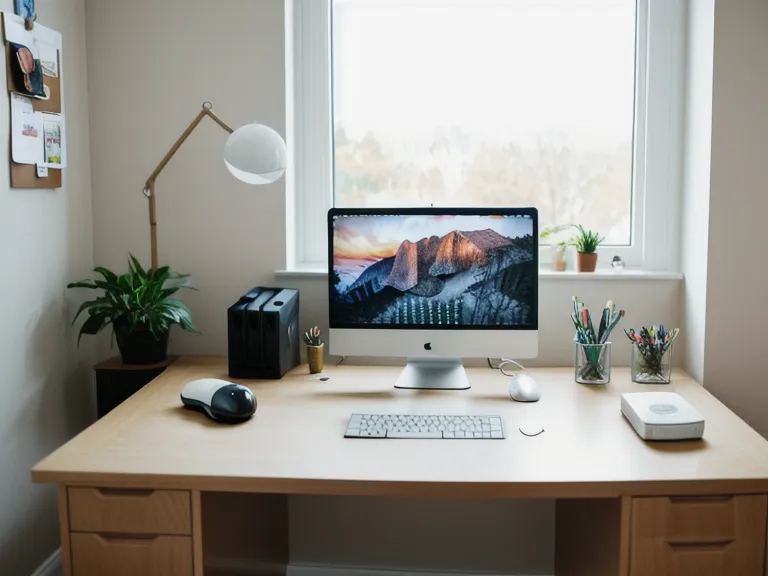
The real issue surfaces when a remote worker's brain refuses to start, even with coffee made, Slack already open, and VS Code still sitting there from last night's session. Is it caffeine? The light coming through whatever window happens to be nearby? The dozen leftover browser tabs from yesterday's debugging session? People obsessed with morning routines and focus hacks will hand you a dozen different answers, but after watching my own brain health erode across years of remote work, I still don't think there's one clean fix. Just two very different camps exist, and most remote workers only ever try one of them.
I've landed on two very different camps for fixing it, and most people only ever try one, which is exactly why so much advice about morning routines contradicts itself depending who's giving it.
Two Ways Remote Workers Try to Fix a Broken Morning
Camp one throws more at the problem: more caffeine, more supplements, more apps promising to force a locked-in state through sheer software pressure. Camp two treats focus as something you protect by changing the actual conditions around it — light, timing, boundaries. Neither camp is wrong exactly. They solve different versions of the same complaint, and mixing them up without noticing is how people spend real money without ever isolating which lever actually moved anything for them specifically.
Piling On More Doesn't Fix It
That first camp is the shelf I built without quite meaning to: nootropics, 'limitless' capsules, herbal blends promising to overclock whatever the prefrontal cortex is supposed to be doing. Most did nothing I could measure. A few gave me a jittery, wired feeling that wasn't focus so much as the sensation of vibrating in place at my desk. I was already well past what's generally considered a safe daily intake most mornings before my first standup, and being wired turned out to be a completely different thing from being able to actually hold a thought.

Software had its own version of the same trap. At one point I was running three separate Pomodoro timer apps at once, convinced that stacking them would somehow triangulate a work session out of pure structure. I'd still end up watching YouTube in the gap between sessions, timer blinking red and ignored, because the real problem wasn't a missing timer but the cost of switching between a code editor and a browser tab a dozen times an hour, a tax no amount of extra timer apps actually reduces. How many tabs and Slack channels were still open from the day before was its own separate tax on working memory, completely unrelated to whatever app happened to be running on top.
None of it clicked until the client call disaster that finally forced me to rethink my remote work brain health. It wasn't a missing supplement that caused that disaster but the total collapse of my morning structure, and no amount of stacked timers or capsules was ever going to patch that.
Changing the System Instead of Fighting It
Camp two starts from a different premise: focus isn't a resource you force-feed, it's closer to a state your brain enters once conditions are actually right, the way a build only compiles clean once the environment variables are set correctly and not a second before.
Getting outside early, even into grey, damp air that has no business being called daylight, means real exposure to the actual visible light spectrum instead of the dim, flat light my apartment gets on an overcast day. That alone anchors a body clock in a way no desk lamp fully replicates, and it did more for how the rest of my morning felt than anything I ever swallowed.
Some mornings the actual fix wasn't a supplement or a lamp at all but walking to Powell's Books on West Burnside before it opened to the usual crowd and reading the first chapter of something that had nothing to do with a client's codebase, a genuine break in the loop instead of another tool competing for the same fifteen minutes. A former coworker of mine, Devraj Pillai, takes this even further: he turns his van into a mobile office for a few months every year and somehow never misses a standup regardless of which state he wakes up in. Whatever he's doing right isn't about a fixed desk or the perfect lamp. It's about hitting roughly the same inputs no matter where the desk happens to be that week.
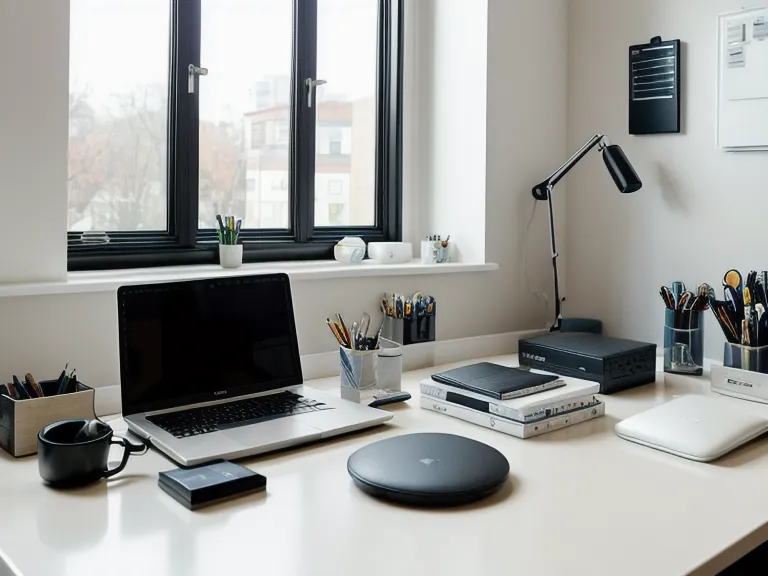
Delaying my first cup of coffee by roughly an hour, instead of drinking it the second I sat down, changed more than I expected, not because of some precise chemical window I could point to, but because the timing stopped fighting whatever my body was already doing on its own in those early minutes. The clearest proof of it was never a number on a tracking app. It was glancing over and noticing my coffee mug still sitting there, full and gone cold, two hours into a work block I hadn't once looked up from. When you actually take a supplement relative to your first meeting of the day turns out to matter almost as much as which one you picked, though that's a deeper rabbit hole than one section can cover. It's the subject of a separate year testing brain frequencies while coding piece, not this one.
The other change was blunter: the phone left in another room during the first real work block of the day, no exceptions, no 'just checking one notification real quick.' Carving out an actual deep work zone in a living room that also doubles as a couch-and-TV room is its own separate project, and phone placement was the cheapest, least technical part of mine. There's a specific feeling when a stubborn bug finally resolves and your hands know it before your brain fully catches up, a small physical click of certainty, and the mornings that worked were the ones where that feeling showed up reliably instead of by accident.
Some developers swear by a single song on loop to trip something like a flow state. I tried it more than once and never managed to make it stick, which says more about matching a fix to the person than about the fix itself. None of this means much without a real baseline of your own rough mornings to compare against. You can't tell whether delaying coffee did anything if you never tracked what a normal bad morning looked like beforehand. And what's actually inside most of those capsules, which compound is supposed to do what, is a longer conversation than a shelf label can hold. It's not one I'm going to pretend to settle here.
The Honest Verdict on Which Camp Wins
Neither camp deserves to win outright, and treating this like a single verdict is exactly the trap that kept me buying capsules for too long. Reach for the add-more approach with a deliberate dose of caffeine, one well-timed supplement, an actual timer you commit to instead of three competing ones when the problem is short and specific: a single brutal deadline, a sprint that needs one hard push before it eases off. Reach for the change-the-system approach with daylight, delayed caffeine, a phone in another room, a real boundary around the workday when the problem is chronic, when every morning feels like the last one, because stimulants can't fix a structural problem and no amount of software pressure replaces conditions your body actually needs.
A few adjacent problems get lumped into this same conversation and really shouldn't be. The specific fog that shows up after back-to-back video calls is a different animal from a slow morning start, and treating both with the same fixes rarely works. What happens to energy and focus by mid-afternoon is its own problem too, with its own separate set of fixes that have nothing to do with what you do at sunrise. Eye strain from staring at a screen all day gets blamed on focus constantly, when it's really a separate mechanical problem wearing a focus costume. Noise leaking in from the rest of an apartment, how a workday actually ends instead of just trailing off, and the small tax of deciding which fix to even try on a given morning are all their own separate fights, not footnotes to this one. There's also a real, useful distinction between brain fog and simply not trying hard enough, and conflating the two is how people end up medicating a problem that was actually about workload or sleep. Recall and focus get blamed on each other constantly too, even though they're different muscles doing different jobs, which is part of why half the capsules marketed as 'focus' supplements are really memory formulas wearing a different label. If you want to know what any of this is actually doing for you, stopping everything cold for a stretch and seeing what's left underneath is its own worthwhile experiment, just not one this piece is trying to run.
Look, none of this makes for a satisfying single answer, and that's kind of the point. Focus for a remote worker isn't a commodity you buy in capsule form, and it isn't a piece of software either. It's closer to infrastructure: boring, mostly invisible when it's working, obvious the second it goes down. Pick whichever camp actually matches the shape of your problem, not the one with the better marketing copy, and judge it by whether your mornings actually feel different, not by how convinced you were on day one.