
Forty-one tabs open across two monitors, and not one of them was the client email I was actually supposed to be answering. That's the number I counted the afternoon I admitted something had broken — not just in my schedule, but in how my brain handles a remote workday that never leaves the apartment. Nothing dramatic. No crying into the keyboard, no dropped call. Just a quiet realization that three years of shipping web projects from a living room had worn down my actual brain health, one missed deadline at a time.
Quick disclosure before anything else: a few of the links below are affiliate links, and if you buy through one I earn a small commission at no extra cost to you. I only mention focus supplements and audio tools I've actually run through real client deadlines, not stuff I read about once and repeated. When My Focus Finally Broke is the post where I first admitted my usual routines weren't cutting it anymore, and readers keep asking me versions of the same handful of questions since then. So instead of retelling that whole saga, here's the direct version.
Is It Really Just Caffeine Burnout?
Short answer: no, though it looks identical from the outside. Caffeine was my first suspect too — I was drinking enough of it that my hands had a low, constant tremor by mid-morning while my actual thinking stayed stuck in place, like a build that compiles clean but never runs. That mismatch is brain fog, not laziness, and it's worth saying plainly, because for a long time I assumed I just needed to try harder. I stacked L-theanine capsules with my coffee for a stretch, and for about a week it genuinely helped. Then it just stopped doing anything I could notice, the way a browser extension you installed for one bug quietly becomes part of the background you stop seeing. I knew the average half-life of caffeine in a healthy adult is close to five hours, and I was treating a chemical with a slow, predictable curve like it could patch a structural problem in real time. It can't. When you take a stimulant matters almost as much as which one you pick, and most people I talk to in my focus Discord get that part backwards.
Why I Started Looking at Sound Instead of Another Pill
By the time I gave up on the capsule approach, I'd stopped chasing a chemical fix and started treating the problem as a signals issue instead. I understand signals — it's most of what I do for a living. The standard human hearing range runs from 20 Hz to 20,000 Hz, and I started wondering whether a frequency inside that range could do something a supplement never managed: build a wall in an apartment that doesn't have one. When the kitchen, the office, and the living room are the same twelve feet of floor, sound is the only real estate left to work with. I tried an audio-based approach called The Brain Song, mostly out of skepticism — it sounded like New Age noise until I started thinking about it in terms of resonance instead of vibes. A 40 Hz tone has a physical wavelength of roughly 8.5 meters in air, which means it's genuinely filling a room the way a wall would, not just distracting you from the fact that it doesn't have one. What mattered wasn't the music itself, it was the trigger: headphones on became my office door, and once that boundary existed, the cost of switching between "home" and "work" mode dropped in a way no kitchen-timer routine ever managed. It gave my afternoons an actual deep work zone that didn't depend on willpower to hold up.
Does This Replace a Nootropic Stack Like NeuroPrime?
Not exactly, and I don't think that's the right comparison to make. Audio and a capsule stack are working on different layers of the same problem — one gives your brain a consistent cue to lock onto, the other is trying to shift your baseline chemistry, and conflating focus supplements with memory supplements is where a lot of people end up buying the wrong bottle. For readers who want a traditional stack to pair with something like this, I've heard reasonable things about NeuroPrime, though for the no-fixed-office lifestyle specifically, audio has been the piece that actually stuck. If you're going to run your own test on any of this, get a real baseline first — "I feel more focused" means nothing if you can't say focused compared to what.
The Moment I Noticed the Difference
There's one afternoon I keep coming back to when people ask if any of this is real or just placebo with good branding. I'd been sitting on a database migration that used to send me to the kitchen every twenty minutes looking for an excuse to avoid it, and headphones on, I looked up two hours later with the whole project proposal done — no half-finished section left for "later me" to untangle, no memory of tabbing away once in between. That's working memory doing its job instead of leaking out through a dozen open contexts. It wasn't caffeinated-quiet, the kind where your heart is racing while you stare at a blank screen. It was just quiet. I never ran a formal washout where I dropped every other habit to isolate the one variable, but stripping back to a single change at a time is really the only honest way to know what's carrying the result versus what's just along for the ride.

Debugging the Rest of the Environment
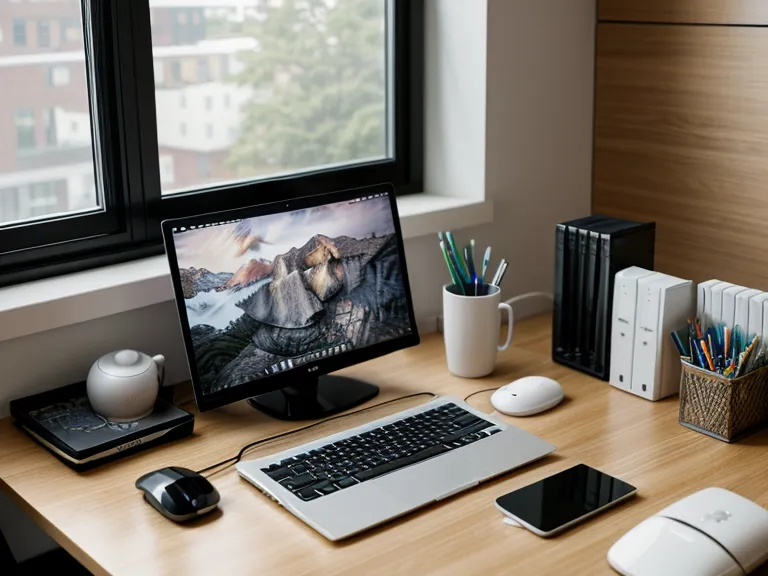
Look, the audio ritual solved the boundary problem, but it didn't solve everything, and pretending it did would be dishonest. I still hit a hard afternoon crash most days — something closer to a 2pm fog than a plain energy dip — and no frequency track has touched that on its own. Zoom fatigue is real too: four calls back to back does something to attention that ambient sound doesn't undo, it just shortens the recovery once the call ends. I still use the Pomodoro Technique occasionally, though nowhere near as religiously as my friend Rosamund, a college roommate who's stayed in Portland doing UX work and who will absolutely notice, and mention it, if I admit to skipping a block. Cutting the number of decisions I make before ten in the morning helped more than expected — same playlist, same starting point, one less thing to negotiate with myself about before the first commit. I moved my phone charger to the kitchen counter, forty feet away from the desk wedged into the corner under the bay window, and just not having it in reach cut a specific kind of low-grade cognitive load I hadn't clocked I was carrying. Some afternoons I skip the apartment entirely and draft proposals at Stumptown Coffee Roasters on SW 3rd Ave in the Pearl District, where the ambient noise does half the job the frequency track usually handles. By early afternoon the air in that corner of the apartment goes stale in a way I only notice once I finally crack the window, usually well after I should have. Morning light through that same window resets my clock better than anything I've bought in a bottle. My eyes give out before my attention does most days now — staring at two monitors for nine hours will do that no matter what's playing in the headphones — so I've started treating logging off as its own deliberate step instead of just closing the laptop mid-thought.
Should Remote Workers Who Aren't Developers Try This Too?
Probably, honestly — none of this is really specific to writing code, it's specific to having zero physical separation between where you live and where you work. I moderate a small Discord for remote-work focus, and one regular there, Clover Mensah, posts time-blocking breakdowns that look like system architecture diagrams, more organized than anything I've ever built for myself, and she works in logistics, not tech. If you're dealing with the same fog I described earlier, don't just throw more stimulants at it. Talk to an actual doctor before changing your routine in any real way, because I'm a developer with strong opinions, not a medical professional. Look at the input side of the problem, not just the chemical side. Finding Flow Again covers how I eventually stacked a few of these pieces together, but if you want the one change that's held up the longest for me, it's still The Brain Song — it hasn't given me the tension headache the smart headband did, it fits into an actual workday instead of demanding one of its own, and it still gets the tabs closed in my head so I can deal with the ones still open in the browser.