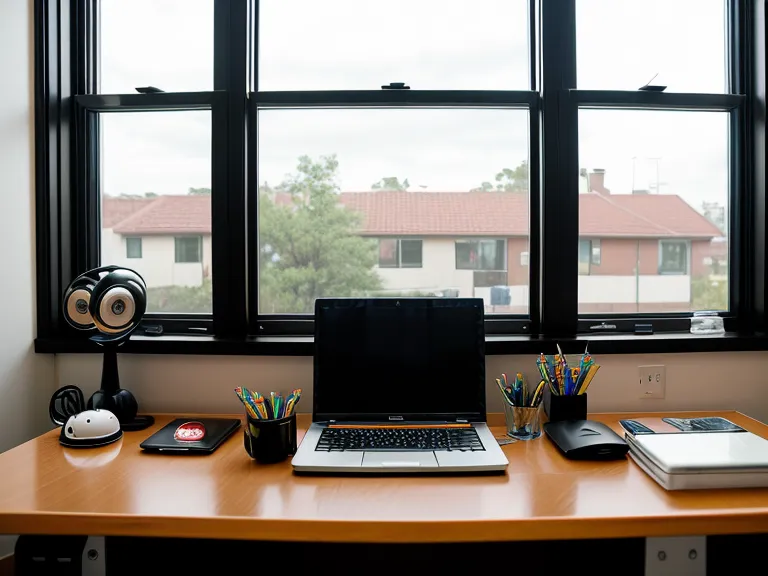
My coffee's gone stone cold in the mug by my wrist, a skin already forming on top, and the only reason I notice is that my eyes finally give out and force me to stop typing and blink until the screen stops smearing. That used to get blamed on sleep, hydration, too much coffee — never on the actual room around me. Home office lighting is one of those variables, like swap space on an old server, that nobody checks until something breaks. Mine had been breaking quietly for a long stretch, and the fix had nothing to do with focus supplements and everything to do with one ceiling bulb trying to do the work of an entire room.
People in the remote-work focus Discord I run ask me some version of the same handful of questions on a loop, Clover Mensah included — she'll DM me a screenshot of her calendar the second anything actually moves the needle for her, so when she's asking I know it's not idle curiosity. Here's the short version of what I tell all of them about desk lighting and eye strain, question by question, instead of retyping the same explanation every time.
The Afternoon Eye-Ache That Isn't About Your Prescription
Short answer: it's rarely the screen by itself, it's the gap between the screen and everything around it. A monitor blasting light at you while the rest of the room sits dim is a mismatch your eyes have to referee all day, and every time they re-adjust between the bright panel and the dark room around it, it costs you something small — the same way a context switch costs a CPU. Small tax. Hundreds of times a day. I've gone deep on the actual mechanics of screen fatigue versus the blue-light myth elsewhere; this piece is about the room around the screen, not the glass itself.
How Much Light Your Desk Actually Needs
Most living-room-corner desks sit well under the lux range recommended for close screen work, which the lighting engineering standard puts at roughly 300 to 500 lux measured on the actual desk surface, not the room in general. You've probably noticed that working from a coffee shop like Stumptown Coffee Roasters on SW 3rd Ave feels easier on your eyes than your apartment, even on the exact same laptop — that's not the espresso talking, it's even, moderate light landing on the table instead of one bright rectangle sitting in a dark box. A phone's lux meter app will tell you in about ten seconds whether your desk clears that bar. Most home offices don't, not because anyone's being cheap, but because nobody ever points a light at a keyboard on purpose.
Why Isn't Brighter Always Better?
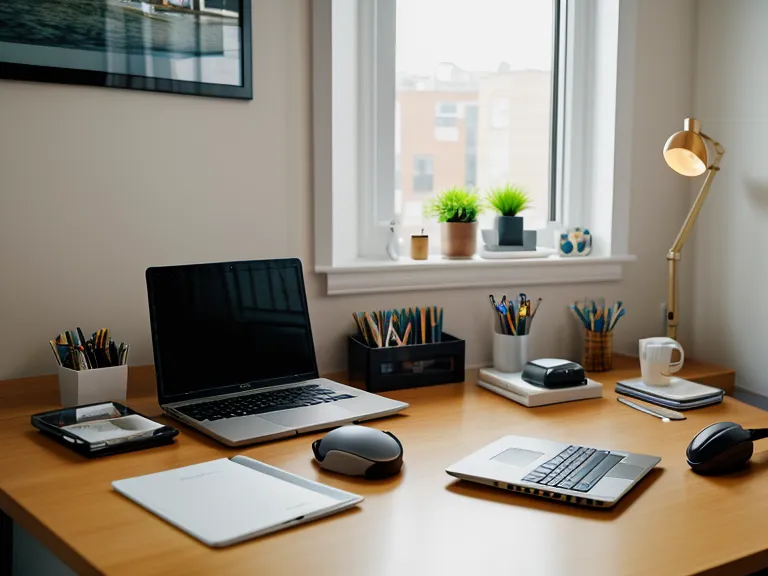
Look, buying the brightest, coolest bulbs you can find seems like the obvious fix once you realize your office is too dim, and I made exactly that mistake first. Cranking cool, daylight-style light at full blast all day sounds like a smart move until you're still running it at nine at night, wired, wondering why your brain won't power down even though the rest of you is wrecked. The fix isn't more light, it's the right light at the right hour — brighter and cooler while you're pushing through the actual hard thinking of the day, dialed warmer and dimmer once the day winds toward its end, so your desk stops arguing with your own sense of what time it is.
Match Your Color Temperature to the Clock
In concrete terms: run something around 4000K to 5000K, the cooler, bluer-white end, during the hours you're doing the actual hard thinking — debugging, architecture decisions, whatever eats the most working memory. Once the sun's going down, swap to a warm 2700K task light instead of leaving the cool bulb running, so your desk isn't quietly telling your circadian rhythm it's noon when it's actually closer to bedtime. Most LED desk lamps ship with a dial or a companion app for exactly this now, which makes it less of a lifestyle change and more like setting a thermostat schedule. The deeper reasoning behind morning light and your internal clock is its own rabbit hole I've gone down separately — the desk lamp swap here is just damage control for the hours you're stuck inside anyway.
The Three-Layer Lighting Setup That Actually Works
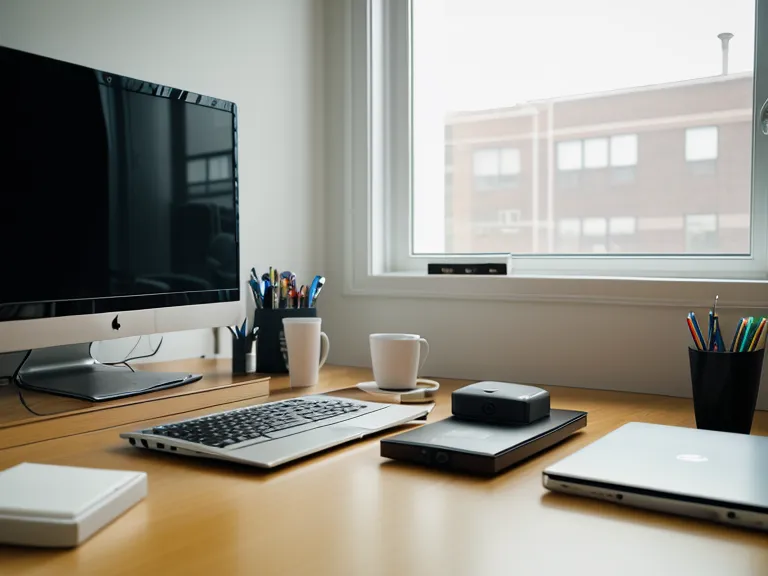
Fixing this didn't take a remodel or a four-figure lighting budget. It took three changes stacked together, and the first one did more than the other two combined. Mounting an LED strip behind the monitor, so it washes the wall behind the screen instead of leaving it black, kills the glaring cliff between a bright panel and a dark void. The first evening I had it running, my shoulders actually dropped. That specific, physical un-clench you get when something that's been quietly working against you all day finally just stops.
Second: a monitor-mounted task light bar aimed down at the keyboard and desk mat, angled so none of it bounces back off the screen. Ceiling lights are useless for this because they either glare straight off the glass or throw your own head's shadow across your keyboard — same problem as a window behind you wrecking your screen, just vertical instead of horizontal. A light bar clipped to the top of the monitor solves both at once: desk gets bright, screen stays clean.
Third, and free: turn the desk so the window sits to one side instead of in front of you or behind you. A window straight ahead competes with the screen and makes your pupils clamp down; a window behind you turns a glossy monitor into a mirror. Side-on, daylight fills in the shadows without fighting the display for your pupils' attention — same logic as not shooting a video call with a bright window directly behind your head, which is its own flavor of looking washed-out and tired on every single standup.
This is also where home office lighting stops being just an eye-comfort fix and starts being part of a bigger structural thing — the kind of boundary-setting I got into more when I worked out how to build a remote work routine for better focus naturally, instead of white-knuckling discipline every single morning.
Can Lighting Replace Your Focus Supplements?
Short answer, no — but it exposes which supplements were doing real work and which ones were basically expensive placebo for a problem that was actually architectural. I ran an L-theanine-and-caffeine stack for a while, convinced it was the thing keeping my afternoons functional. It helped for about a week, then quietly stopped doing anything I could detect, the way a lot of stacks do once your body adjusts. I'd gone looking for the best nootropic supplements for software developers with brain fog before I ever pointed a lux meter at my own desk, which is backwards — it's trying to fix a memory leak by renting more servers instead of finding the leak.
Once the desk itself hit a reasonable lux range, with color temperature actually shifting across the day instead of running flat, the three o'clock crash didn't need nearly as much chemical help to push through. That's not a knock on supplements across the board, more that lighting turned out to be the cheaper, faster variable to fix first — the same way you check whether a slow endpoint is a bad query before reaching for more caching. If the familiar afternoon dip is still your main complaint even after the room's sorted, that's a separate rabbit hole — I wrote up what actually helped beyond the afternoon crash: how I rebuilt my coding focus after caffeine stopped working, worth a read before reaching for another bottle.
When Should You Stop Blaming the Lighting?
None of this replaces an actual eye exam, and if what you're feeling is sudden, sharp, or doesn't track with how your day's going, that's a question for an optometrist, not a lighting diagram. I'm a developer who got tired of guessing, not anyone with the training to rule out something more serious. For everything else, the fastest test is also the dumbest one: turn your monitors off tonight and just look at your desk. If it reads like an interrogation room or a server closet, no number of focus supplements is going to out-argue that environment. A dedicated, decently lit spot — the kind of deep work zone that's actually set up for the job instead of borrowed from the living room — does more for a tired afternoon than another capsule ever will.