
A cold shower will snap you out of a slow start. It does nothing for the kind of fog that shows up hours into the work day, when the terminal's open and nothing behind my eyes is loading. I ran that experiment every morning for weeks at six a.m. without exception, while what people call remote work burnout stopped being a phrase and turned into the actual shape of my calendar.
Quick disclosure before this goes further: a couple of links below are affiliate links, and if you buy through one I get a small commission at no extra cost to you. I only mention focus tools I've actually run through real work weeks, not stuff I skimmed on a forum the night before writing this.
Two Ways to Chase Focus, Two Different Results
Here's the actual comparison, since a single before-and-after story never tells you much on its own. On one side: capsule supplement stacks, the kind every biohacking forum swears by. On the other: audio-based focus tools, which sounded like nonsense to me the first time a client mentioned one on a call. I ran both through real project weeks, not a controlled study since I'm a web developer and not a researcher, but a pattern showed up anyway, and as a developer, that pattern mattered more to me than any single glowing result.
The capsule side started with a "premium" nootropic stack from a supplement forum, the kind that promises limitless focus and delivers a metallic taste in your mouth and a heart rate that feels like a bad deploy, with everything green on the dashboard except the actual outcome. It didn't fail quietly either. It failed loud, with side effects, and still didn't touch what I actually needed fixed: the drag of context-switching back into a half-finished pull request after a call ran long.

What the Capsule Stack Actually Delivered
None of this means supplements are useless; plenty of people get real results from the right stack, timed right. Timing turned out to be the whole game for me, though, and I never nailed it. Take it too early and it's spent before the afternoon slump even starts; take it with coffee and you can't tell which one's doing the work anymore. That's the timing problem in a nutshell, and it's a bigger variable than most reviews admit. The stack also never solved for something more basic: cognitive load. My browser had too many tabs open, notifications stacking up across a couple of Slack channels, and a brief a client was still editing in real time. No capsule fixes that kind of clutter, because the problem isn't chemical, it's architectural.
I also learned the hard way that focus supplements and memory supplements aren't the same category, even though the marketing copy blurs them together constantly. An ingredient built for attention won't necessarily do anything for recall, and the reverse is just as true. My own baseline for "is this working" was embarrassingly unscientific: could I remember what a client asked for without scrolling back through the thread.
Does an Audio Tool Actually Change Anything?
Audio is a different mechanism entirely: no chemistry, no timing puzzle, just headphones and a track running while you work. I started using an audio-based focus tool called The Brain Song mostly out of skepticism, half-expecting it to be the audio equivalent of the metallic-tasting stack. It wasn't. I can't tell you exactly what's happening neurologically, though I'd rather undersell this than oversell it, but the practical effect showed up in places I wasn't tracking on purpose.
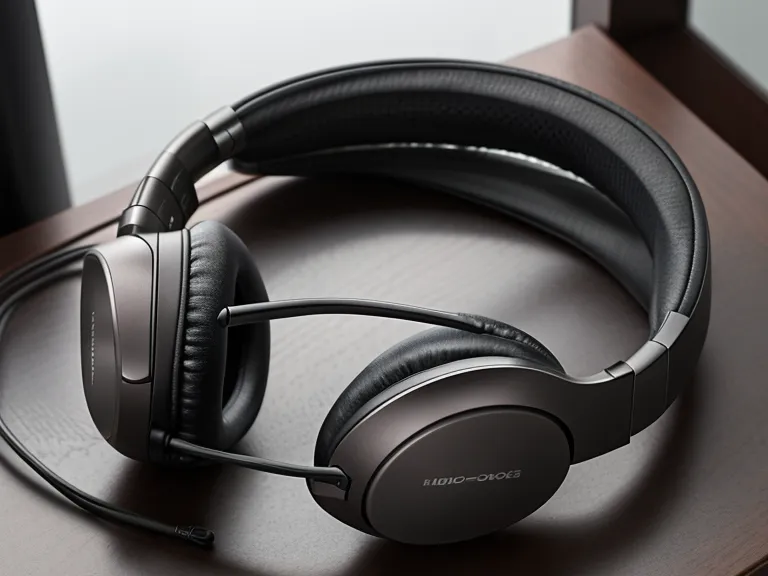
Back-to-back Zoom calls used to leave a specific residue: that glassy, over-lit feeling by the last call of the day, somewhere between screen fatigue and plain old Zoom fatigue, and no amount of blue-light glasses touched it. What changed, gradually, was how fast I could drop into an actual deep-work zone once the last call ended, instead of needing a stretch of doom-scrolling first. Turns out controlling what's in your ears matters as much as controlling what's on your screen. An auditory environment you've chosen on purpose does something that just hoping for a quiet house never did, especially with a router humming faintly somewhere in a room that's otherwise dead silent.
If you've ever felt like your brain is spinning its wheels no matter how hard you push it, that's roughly the territory I covered in After Three Years of Zoom Fatigue, I Stopped Chasing Focus and Started Listening for It. It's about the shift from pushing focus to actually allowing it, which sounds like nonsense until it isn't.
The clearest evidence wasn't a productivity metric. I don't track hours like a spreadsheet person, no shame to those who do. It was smaller than that. A client said something offhand in a kickoff call once, some half-joking line about hoping I'd actually show up mentally for this one, and it stuck. I could still repeat it back almost word for word long after that project wrapped. That kind of recall used to be gone by the next standup. It's a strange way to measure focus, but it's the one that convinced me something in my attention had actually shifted, not just my mood.
None of this happens in a vacuum, either. Morning light through an actual window does something for a body clock that no amount of audio substitutes for, and I still open the blinds before I open Slack. Devraj, a former coworker of mine from back when we both worked in an office, still insists a fancy pour-over is a legitimate business expense, and he's only sort of joking. The ritual matters almost as much as the caffeine does, which is its own kind of trigger for getting into flow. The afternoon energy crash is a separate problem from all of it, honestly, and no single tool fixes both the slump and the scatter. What actually helped was treating "I can't focus" and "I'm just tired" as two different bugs instead of one, because they've got different root causes: brain fog isn't the same failure mode as low effort, even though from the outside the two look identical. It also changed the end of the day: closing the laptop and actually feeling done, instead of just tired of trying, turned out to be its own kind of shutdown ritual I didn't know I was missing.
Picking the Approach That Matches the Problem
So which one actually wins? Neither, universally. That's the honest, slightly unsatisfying answer. A capsule stack might make sense if the problem is closer to low energy or motivation, something a stimulant genuinely addresses, and you're careful about timing and dosage. An audio-based tool made more sense for what I actually had, which was a context-switching problem wearing a focus problem's clothes: too many inputs, not enough of a boundary between "call" and "code." If your calendar looks like back-to-back meetings bleeding straight into solo deep work with no transition between them, that's the pattern I'd bet on audio helping more than another bottle of capsules would.
I also stopped chasing memory-specific supplements somewhere along the way, once it became clear my "bad memory" was really a bad attention span with better branding. I wrote up that whole experiment (quitting the stack cold mid-project just to see what would happen) in The Digital Fog: What Happened When I Cut My Focus Stack During a Major Client Project, and the short version is: less changed than the bottles on my desk wanted me to believe.
The Brain Song still stays in my rotation, mostly because it's the one thing on my desk that never came with a side-effect disclaimer of its own, and it's a low-friction way to test the audio approach before committing to anything more elaborate. It's not a fix for actual burnout, and it won't rewrite how your nervous system handles stress. It's a tool, not a rescue plan. But if the "brain fog" you're dealing with looks more like a scatter of context-switches than a lack of willpower, it's worth trying before reaching for another capsule stack.
None of this is medical advice, and I'd rather say that outright than bury it in fine print. If what you're calling brain fog feels bigger than a rough remote-work stretch, that's a conversation for an actual doctor, not a developer with a blog and an affiliate disclosure.