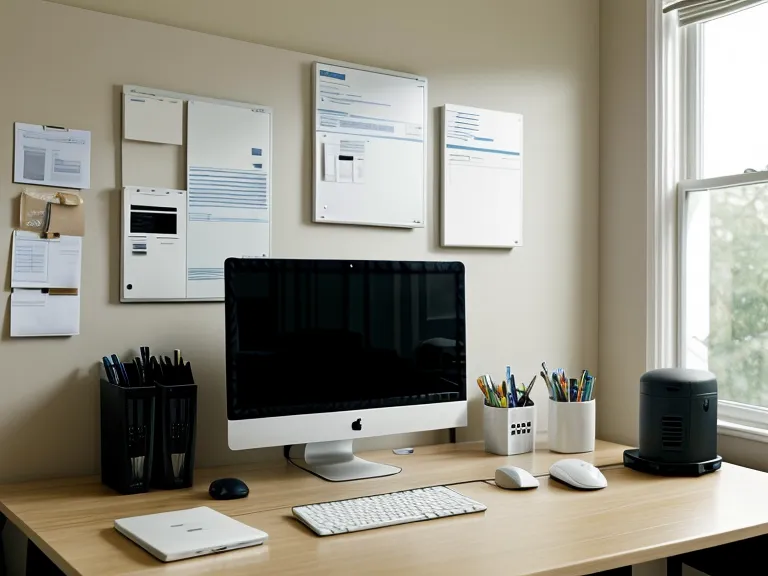
My cursor sits on an input component I've read four times without any of it landing. It's nothing complicated, a debounced field, the kind of thing I could normally write half asleep, and half asleep is generous, two coffees in, with the kind of remote work focus problem no amount of caffeine seems to touch today. Outside, it's the flat gray Portland does for months at a stretch, which isn't helping.
Quick disclosure before any of this goes further: a few of the links below are affiliate links, and if you buy through one I get a small commission at no extra cost to you. I only mention tools I've actually run through a real deadline, not something I read about secondhand. I'm a developer who got desperate enough to experiment, not a doctor, so none of this replaces an actual conversation with someone qualified.
This isn't the story of one bad week. It's a comparison of two remote work focus approaches I've genuinely run during a brutal deadline: a full brain health supplement stack on one side, a stripped-down set of productivity tools and habits with nothing chemical involved on the other. Both got tested during the same kind of project — high-pressure, client-facing, zero room for a bad sprint — and the gap between them ended up bigger than expected.
Two Focus Hacks for the Same Remote Work Deadline
Working out of the corner of my living room built a lot of scaffolding I'd stopped examining. The desk stands under a bay window I never actually open, both monitors propped at eye level while the laptop stays shut, tucked out of reach on its own separate mount, about as close to a dedicated deep-work zone as a one-bedroom rental allows. The phone charges on the kitchen counter now, a good forty feet from the desk, and that walk alone does more for my attention span than either supplement pile ever managed. A pothos that's more brown than green sits on the sill above the keyboard, ignored more than watered, though it's outlasted worse than a deadline.
Before comparing anything fairly, I needed an actual baseline instead of a vibe, a real sense of what my brain does with zero chemical help, which meant the first stretch of this was less about performance and more about data collection. I'd already been tracking my focus hours the same way I track billable hours, so the numbers existed. They just told an increasingly grim story.

Running the Full Stack
Running the full stack looked like a small pharmacy on the corner of my desk: something for morning clarity, something else for the 3pm dip, a third thing meant to shut the code-brain off at night. Whether any of it was a genuine nootropic effect or just caffeine and desperation stacked on top of each other, I honestly couldn't tell anymore, and that uncertainty is the entire reason this comparison exists.
Timing mattered more than the ingredients did half the time. A capsule taken right before a client call landed completely differently than the same capsule taken with coffee at sunrise. I'm not going to get into what any single ingredient is supposedly doing at a cellular level; that's a deeper rabbit hole than one post can responsibly cover, and not one I'm qualified to lead anyone down. What I can report is the practical result: sharper for maybe an hour and a half, then a crash disproportionate to the boost.
The stack did something, that much was obvious, but it also came with a tight jaw I didn't notice until it was gone, turns out I'd been grinding my teeth through pull requests for months without clocking it as a supplement side effect. It's not the first time I've tried solving this by removing a variable instead of adding one; a strict ninety-day keto stretch thinned the fog for a while too, but it fell apart the moment a project hit crunch mode and I needed something faster than meal prep allowed. Cutting the entire stack cold, mid-project, felt like the more honest test.
What Happens When the Bottles Disappear?
What happens is: not much good, at first. Focus that usually needed a short ramp-up to reach real deep work splintered into pieces that lasted about as long as a Slack notification. Zoom blocks felt rougher no matter what I had or hadn't taken that morning, which tracks — some of that is just Zoom fatigue, stack or no stack, and no capsule was ever going to fix a calendar that runs back-to-back from nine to four.
My eyes were fried by six most days regardless, and mental fatigue from screen time stacked on top of actual sleep debt in a way no blinking exercise was going to fix. Coffee filled part of the gap, more of it than felt reasonable, though I stopped short of doing the math on exactly how much. Clearing out the graveyard of browser tabs did more for my actual cognitive load than most of what had been sitting in the pill drawer.

I needed something that didn't feel like overclocking a CPU that was already running hot, so I started looking at non-capsule options, something to control the auditory chaos of a home office instead of another chemical trying to force the issue. That's how I ended up testing The Brain Song, an audio-based tool that's less a lo-fi playlist and more something built to nudge the brain toward a working frequency, a flow-state trigger instead of a stimulant. I was skeptical going in — I've tried every focus playlist on the internet — but it was the first thing that actually closed that ramp-up gap without a chemical kickstart.
There was a stretch during this stripped-down period where I pushed a two-hundred-line pull request from the first line to the last without once losing the thread of what I was building, no rereading the same function four times just to remember what it was supposed to do. That's not nothing, coming off weeks where a single CSS rule could stall me for an hour. I paired the audio with strict 25-minute intervals, and for heavier architectural thinking I tried The Genius Song too, which runs more intense and worked better for planning sessions than routine ticket work.

My friend Rosamund, a UX designer who's stayed in this city about as long as I have since we were college roommates, still gets quietly annoyed when I admit I skipped a Pomodoro block, she treats the 25-minute interval like it's load-bearing. Coffee breaks stopped being about coffee and turned into laps around New Seasons Market on SE Division St, mostly just to put my hands on something that wasn't a keyboard. By the time I got back to the desk, my wrist had settled into the same worn dip on the mousepad it always finds during a long stretch of debugging — a small, dumb groove that somehow only shows up once my attention isn't being yanked six directions by a stack of capsules.
The Stack Wins on Speed, Loses on Sustainability
Someone in the focus-tracking Discord I moderate — Clover, who posts time-blocking breakdowns that look more like system architecture diagrams than actual calendars — made a point that stuck with me: the stack might just be masking a scheduling problem instead of solving a focus one. Every Slack ping answered mid-ticket cost a context-switching tax that neither pills nor audio tracks were ever going to refund, and that part was on me regardless of which side of the experiment I was running.
The full stack won on speed. Within twenty minutes of a capsule I'd feel a noticeable pull toward the keyboard, which matters when a client call starts in ten minutes and you need to look competent immediately. What it didn't do was hold up over a stretch of actual weeks, the jaw tension, the crash, the slow erosion of trusting my own baseline focus, all of it added up faster than any deadline pressure did. Cutting the stack took longer to pay off and never delivered that same fast pull, but it didn't cost me anything physical either, and closing the laptop stopped meaning much until I built an actual shutdown ritual separate from whatever pills I had or hadn't taken that day.
So Which One Should You Actually Try?
So which one actually holds up depends on what you're solving for. Need a short burst to get through one high-stakes call or one brutal day? A stimulant-leaning capsule stack will probably get you there faster than anything else here, and pretending otherwise wouldn't be honest. Managing months of sustained client work without a jaw that aches by Friday? Cutting the stack and rebuilding around environment, a real end-of-day boundary, and a non-capsule tool held up better for me over the long stretch.
It's worth saying plainly: what reads as fog from the outside often gets mistaken for laziness, by a client or by yourself on a rough afternoon, and that distinction matters more than which product ends up in your cart. If you want to try the audio route, The Brain Song here is the one that actually closed my ramp-up gap. If you'd rather stick with something in capsule form, I've also written up my experience with Neuro-Thrive as the more traditional option. Either way, talk to an actual professional before changing anything meaningful about your own routine, I ran an experiment on myself, I'm not qualified to tell you what your brain needs.