Most of my remote work day goes to reacting to whatever pinged last rather than real thinking. I spent a while assuming the answer was fine, until the gap between those two numbers started showing up in missed client deadlines. This isn't a rundown of productivity advice or a cognitive health explainer. It's what happened when I turned my own foggy attention into a deep work experiment, one capsule and one audio track at a time.
Quick disclosure before any of this goes further: some of what I mention below are affiliate links, so if you click through and buy something, I get a small cut at no extra cost to you. I only write about tools I've actually run through a real deadline, not stuff I skimmed off a review site. I build websites for a living, not medicine, so none of this replaces an actual conversation with your own doctor.
The Slow Leak in My Focus
I went remote in 2020, like a lot of developers did. First year was great — no commute, real lunches, pants technically optional. Then the wall between "work" and "living room" started dissolving, and I didn't notice until my brain stopped noticing the difference either. My desk lives in a converted corner of the living room in the rental I've got on Portland's inner east side, which sounds cozy until you realize your brain never fully clocks whether it's supposed to be shipping code or half-watching something from the couch a few feet away.
The actual proof came when I missed two client deadlines in the same month — something that never happened once in ten years of office work before this. Every context switch between a pull request and a Slack thread was costing me more than I wanted to admit, and it stopped feeling like a motivation problem. It felt less like laziness and more like a system quietly running out of memory mid-task.
Testing Capsule Stacks Like a Debugging Sprint
Once I admitted something was actually broken, I treated my own attention like a performance problem instead of a character flaw. I started tracking my focus hours the same way I track billable hours, logging when I was genuinely writing logic versus just staring at a cursor blinking at me. That baseline — a stretch of honest, unglamorous numbers before I touched a single supplement — ended up mattering more than any capsule I bought afterward.
Honestly, from there I worked through a handful of capsule stacks, NeuroPrime among them. It's a solid, no-nonsense option if you want something in a bottle instead of through headphones, and it did take the edge off some afternoons. I won't pretend to know the exact mechanism behind every ingredient in a stack like that — that's a much longer rabbit hole than this post — but stacking a premium capsule on top of a bad night of sleep is a bit like patching a memory leak with more RAM: it buys you time, it doesn't fix the leak.
Heavy stimulant stacks are a trap if you're not strictly a 9-to-5 person. Taking something aggressive at 7 PM to grind through a sprint might buy two hours of hyper-focus, but it's basically a denial-of-service attack against your own circadian rhythm, and the next day's outage costs more than the sprint was worth.
Audio Worked Better Than Any Capsule I Tried
By the time capsules started feeling like diminishing returns, I'd already accepted that rebuilding a freelancer's focus without an office takes more than willpower. That's when I switched from swallowing something to listening to something — The Brain Song, an audio track built around specific frequencies meant to nudge your brain toward a working state instead of a scrolling one.
I was skeptical, being the type who wants a chart before I believe anything. Somewhere around week eight of actually using it during work blocks, on one unremarkable afternoon, I sat down to write a project proposal and didn't look up again until the whole thing was drafted, start to finish, in one sitting. No tab-switching, no refreshing email between paragraphs. That kind of unbroken stretch had gotten rare enough that I actually noticed it happening.
The audio approach ended up being a steadier anchor than any capsule's jittery peak — less like a spike, more like a low, consistent hum in the background. Something like Neuro-Thrive still has a place for general brain health on an ordinary day, but for the specific act of sitting down and writing logic, audio was the actual surprise of the whole season.
Fixing the Deep Work Zone Before Fixing the Brain
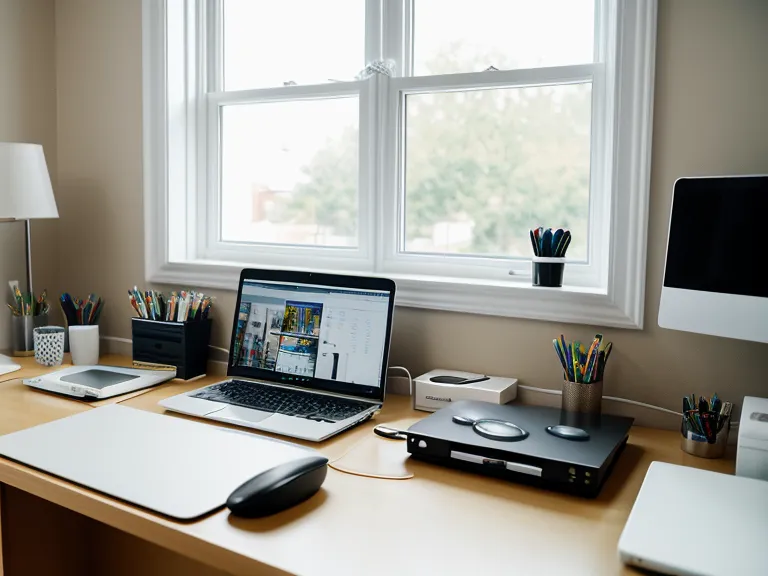
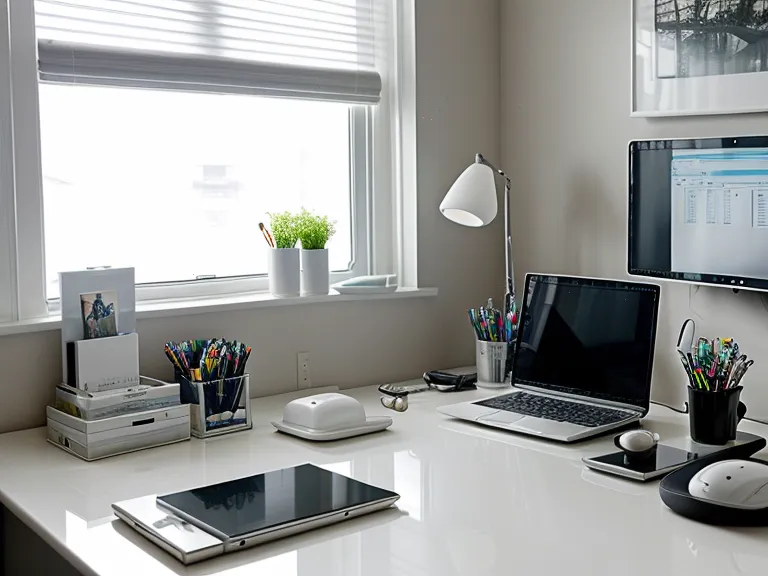
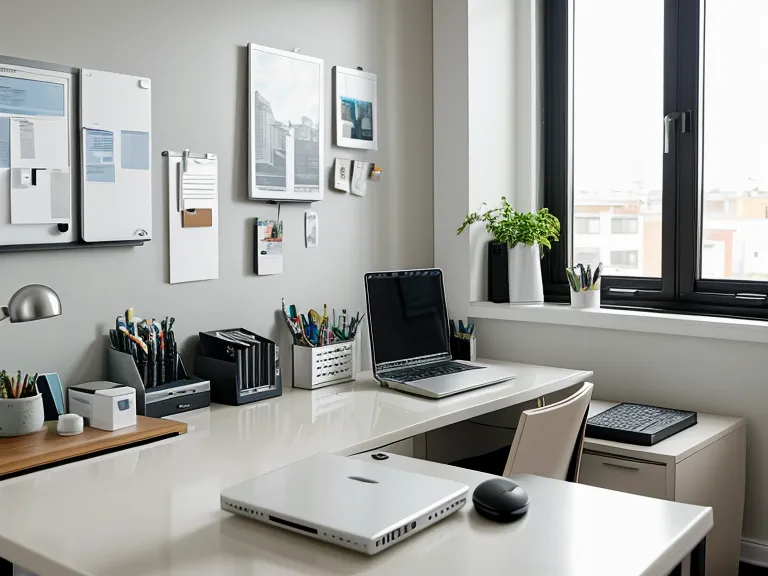
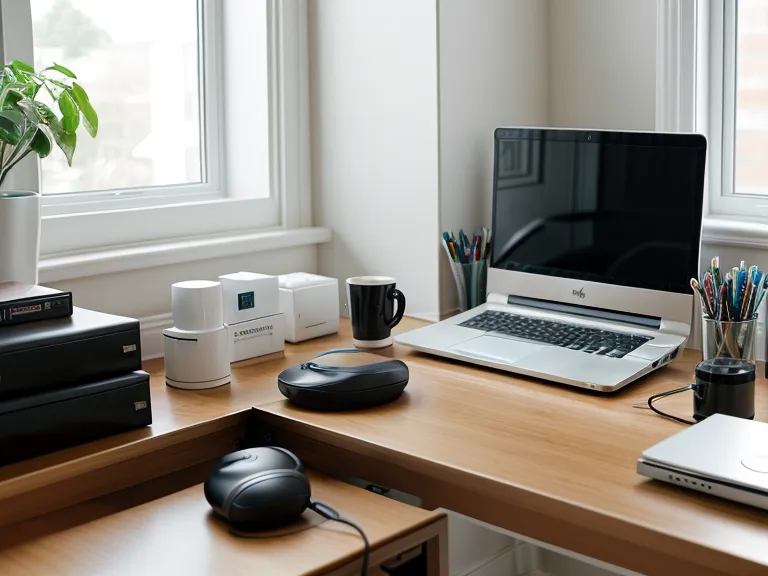
None of the audio tracks or capsules mattered much until I fixed the actual environment I was working in. My setup: a standing desk tucked into the corner of the room, a window falling just to the side of the screen, two monitors raised to eye level, and the laptop itself shut and parked on its own separate mount off to the side so it can't double as a second screen pulling my eyes away. There's a stubbornly half-alive plant on the windowsill above the keyboard tray that has outlived several attempts to kill it through neglect — either a metaphor or just a plant.
My actual routine now: phone charging out on the kitchen counter, roughly a room away, headphones on, The Brain Song queued up before I open the first file, and exactly one coffee, not four. On days the room gets loud or my attention keeps snagging on movement across the space, swapping in The Genius Song instead handles the noise and the visual clutter better than headphones alone.
Cutting down the number of browser tabs open at any given moment did more for what you'd call cognitive load than any supplement did — fewer open loops, less to track, less mental RAM spent on nothing. The trigger that actually worked for slipping into a flow state was ritual, not chemical: same headphones, same track, same starting sequence every time, so my brain learned what "now we're working" sounds like before I'd typed a single line.
The Afternoon Crash Nobody Warns You About
Every remote developer I know hits some version of the same wall in the mid-afternoon — call it Zoom fatigue, call it a sugar crash, call it your brain just refusing to parse one more paragraph of documentation. Mine used to show up right after a string of back-to-back calls, eyes aching from staring at a lit screen for hours with barely a blink. Getting outside for a walk on Wildwood Trail in Forest Park, even for twenty minutes at lunch, did more for that afternoon dip than anything I swallowed — daylight earlier in the day seems to matter more than any stack timed for the crash itself. A friend of mine, who leads weekend rock climbing sessions out at Portland Rock Gym, insists the answer to burnout is just more physical exertion. Maybe for the muscles. My eyes were still glued to a laptop nine hours a day regardless of what my legs were doing.
Timing mattered more than I expected, too. Anything stimulant-adjacent felt completely different taken at 8 AM before a coding block than wedged in after lunch as a rescue attempt, so I stopped treating supplement timing as an afterthought and started treating it more like scheduling a build — order matters, not just what's in the pipeline.
The failed experiment that still makes me wince a little: a standing desk converter. I was convinced height was the missing variable, so I bought one, used it religiously for exactly eleven days, and reverted straight back to sitting once my lower back started hurting more than my focus was improving.
Was the Whole Season Worth It
Look, was it worth the time and money sunk into stacks and subscriptions? Mostly, yes — though the real lesson turned out cheaper than any of the products. No amount of capsules fixes a bad night of sleep or a desk that invites distraction; the environment has to be right before a supplement or a track becomes a force multiplier instead of a placebo. That's the one thing I'd tell anyone starting where I started: fix the room and the sleep first, then let supplements be the smaller adjustment, not the whole plan.
A reader named Tarkan Wesolowski emailed through the site's contact form a while back, describing a 2 PM crash that sounded almost identical to mine. He'd been tracking his own caffeine intake for a stretch and had finally managed to cut back his daily total — proof that the tracking part matters as much as whatever you're tracking toward. I still keep a rough log myself, partly for the data and partly because writing down what I actually remember from a working session, a detail from a call, a variable name I'd normally lose, turned into its own useful signal for whether a day was a good one.
These days I close my laptop around 5 PM and mean it — no half-checking Slack from the couch an hour later. That boundary alone probably did as much for the next morning's focus as anything in a bottle. If you're dealing with the same fog, don't throw money at it first. Fix your sleep, fix your desk, and treat the rest as an experiment, not a rescue plan. If you want a low-friction place to start that isn't another pill, The Brain Song is the one tool from this whole season that's still part of my daily setup. Just loop in your own doctor before changing anything major, especially if you're planning on cutting back that fourth cup of coffee.